
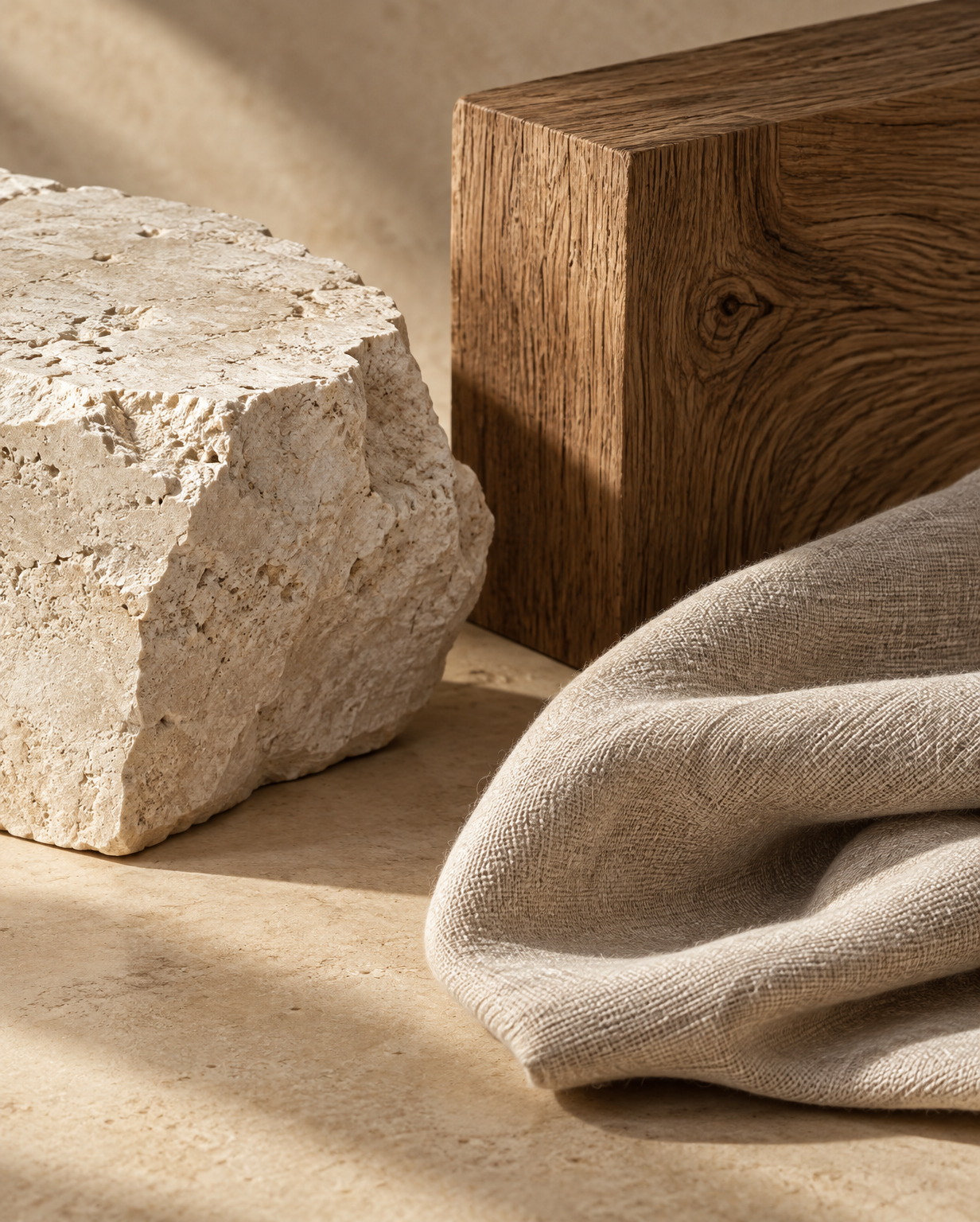
A material is more than a finish. It has a temperature, a texture and a way of catching the light. In a considered interior, stone, timber and woven textiles each bring a distinct presence, and their relationships can make a room feel composed without demanding attention. This conceptual material study is an editorial illustration.
Stone rewards a pause. Its surface may appear cool and quiet at first, then reveal subtle shifts in tone, grain or natural variation. Used with restraint, it gives a room a grounded quality. The scale of a stone surface matters too: a generous plane can feel calm, while smaller pieces introduce a different rhythm.
Timber brings warmth through its grain and the way it changes with light. A natural finish allows those details to remain visible rather than treating wood as a blank surface. Its tone can sit alongside stone in contrast or continuity; the effect depends on proportion, texture and the light in the room.
Textiles soften the meeting of harder materials. A woven fabric catches shadow differently from a polished surface, lending depth to a chair, curtain or rug. Texture can offer contrast without introducing a new colour story, particularly when the palette remains close to the natural character of the materials.
The pairing is less about collecting beautiful finishes than giving each one room to be understood. One prominent texture, supported by quieter companions, often feels more resolved than a series of equally emphatic surfaces. Changes in scale and finish can make a restrained palette feel nuanced rather than uniform.
Materials gain presence through balance. Stone can anchor, timber can warm and textiles can soften; considered together, they shape an interior that is tactile, calm and comfortable to live with.
Leave a Reply