
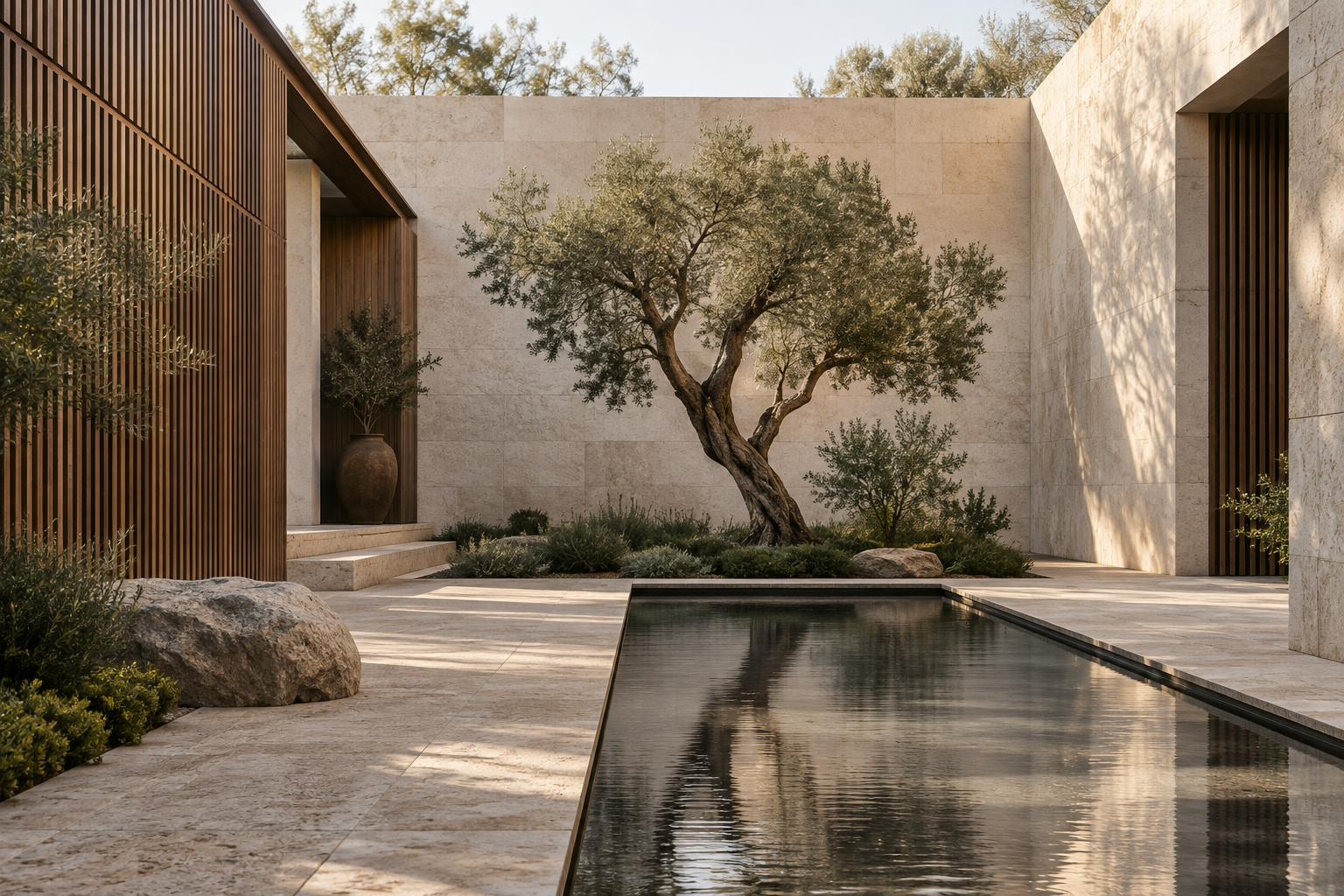
Privacy in architecture is not simply the absence of a view. It is the quiet ability to choose how a home opens to the world—and where it invites retreat. A conceptual architectural study, this image considers privacy as a quality shaped by space, light and thoughtful thresholds.
An arrival can unfold gradually. A sheltered entrance, a change in ceiling height or a screened passage offers a moment to leave the outside behind. Rather than separating arrival from the home with a single abrupt boundary, these layers create a gentler transition between public and private life.
Courtyards offer another kind of threshold. Enclosed yet open to the sky, they can bring daylight and air into the centre of a plan while turning views inward. Planting, textured walls and the changing angle of the sun give the space a sense of refuge without making it feel closed.
Sightlines matter just as much as walls. A considered arrangement can frame a garden from one room while screening it from another. A doorway might reveal a calm view from the entrance yet preserve the privacy of a bedroom or a place to work. Small decisions about alignment and orientation influence what is seen, and what remains personal.
Openness and retreat need not be opposites. A room can feel connected to its surroundings through borrowed light, a distant view or a sequence of connected spaces, while offering sheltered corners for quieter moments. The balance depends on the rhythms of the people who use it and the conditions of the site.
Privacy is most persuasive when it feels effortless. Layered entrances, sheltered outdoor rooms and thoughtful sightlines can give a home both a sense of welcome and a place to withdraw—without asking either quality to dominate.
Leave a Reply